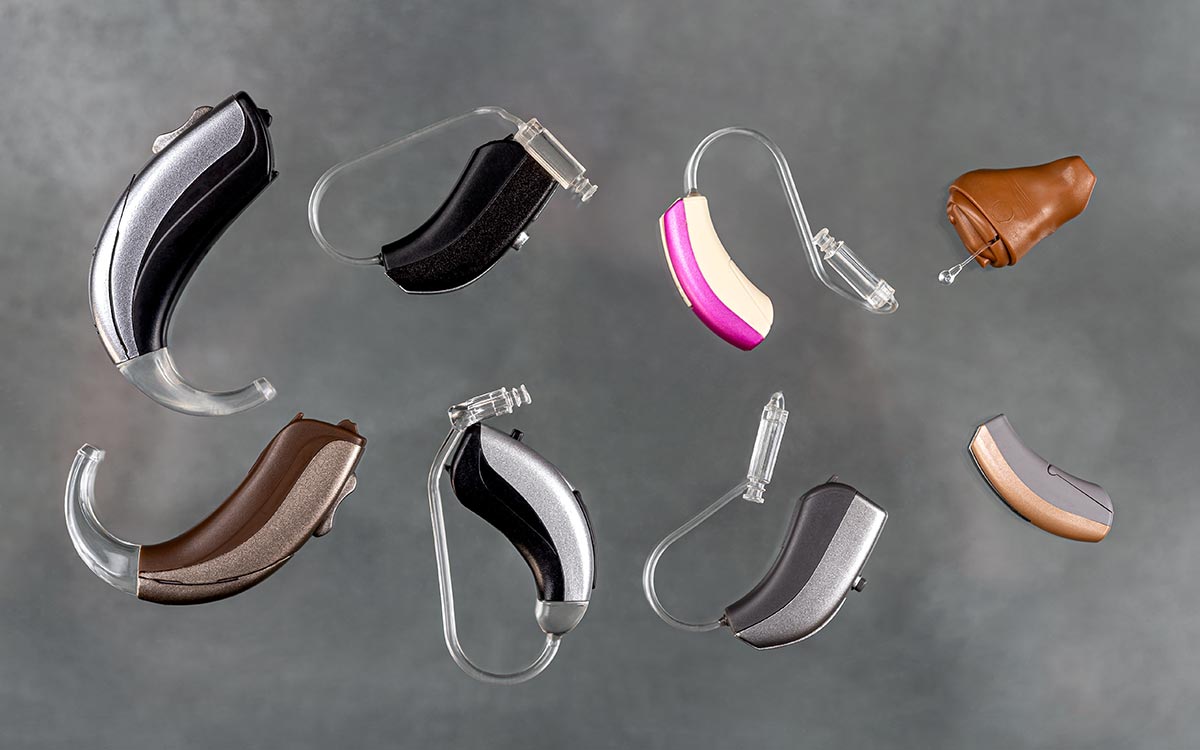
With so many options in terms of size, style, and technology, the process of picking a hearing aid can feel quite intense. Rest assured that there is an assistive device customized to every lifestyle and degree of impairment. It’s all about discovering which model fits perfectly with your specific requirements.
Understanding the distinctions among the most popular types of hearing aids can help you feel more informed and confident as you explore your options. Today, we’re breaking down the different hearing aid styles and what makes each one unique.
ITC (In-the-Canal) Hearing Systems
Basic Summary:
These hearing aids are placed partly inside the canal, making them visible only slightly from the outside.
Common Advantages:
- Less apparent than standard full-size models
- Individualized molding ensures long-term wearing comfort
- Appropriate for mild to moderate hearing loss
Because they provide both discretion and helpful features, ITC models are an excellent pick for those new to hearing technology.
Invisible-in-Canal (IIC) Hearing Aids
Core Traits:
IIC hearing aids are the tiniest custom design available. They are inserted deeply within the canal to remain hidden from view.
Why people choose them:
- Offers the most subtle look of any hearing aid style
- Provides authentic sound because of where the device sits
- An ultra-light build makes them easy to wear all day
Because of their small size, IIC devices typically work best for mild to moderate hearing loss and for those who prefer a nearly invisible option.
ITE (In-the-Ear) Model Overview
Structural Data:
ITE hearing aids occupy either the entire outer ear (full-shell) or the lower portion (half-shell). The shell is uniquely molded to the specific contours of your individual ear.
The Advantages:
- The increased surface space offers space for extra functionality and extended power
- Simpler to handle for those with dexterity challenges
- An adaptable option that can address even significant levels of hearing loss
Many people prefer ITE devices because they provide a streamlined, self-contained design that doesn’t hook over the ear.
Exploring BTE Designs
Technical Data:
BTE hearing aids sit comfortably behind the ear. Audio travels through a dedicated tube or custom-fit mold into the ear opening.
Key Strengths:
- Offers a long-lasting and versatile solution for various environments
- Function for nearly all degrees of hearing loss
- The size provides ample room for the latest connectivity features and rechargeable hardware
If you need a sturdy hearing aid that is simple to operate and offers high-power output, the BTE style is ideal.
Receiver-in-Canal (RIC) Hearing Aids
What they are:
RIC hearing aids look comparable to BTE models, but the speaker (receiver) sits inside the ear canal rather than inside the device behind the ear.
Why they are popular:
- Minimizes the “plugged up” feeling for more pure hearing
- Offers a very low-profile appearance that is easy for almost everyone
- Excellent for multiple levels of hearing loss
RIC units are extremely common currently because they balance appearance with powerful functionality.
Understanding Extended-Wear Systems
Operational Info:
Extended-wear models are semi-permanent units that a professional fits into the ear for a duration of several weeks.
Why people select them:
- Eliminates the need to put in or take out the device every day
- Offers an entirely covert solution for hearing health
- You can go about your whole life—including sports and rest—while wearing them
If you prefer a hearing solution that requires zero daily thought, the extended-wear style is perfect.
Smart Hearing Aids with Wireless
Digital Features:
Connectivity-focused hearing aids that use radio to integrate with your digital life.
Digital Advantages:
- Enjoy direct sound streaming from your phone or TV right into your ears
- Provides a discreet way to manage your hearing environment from your mobile screen
- Perfectly suited for the needs of an advanced, connected individual
Bluetooth features are available across many styles, including RIC, BTE, and some ITC models.
Understanding Middle-Ear Implant Systems
Technical Definition:
An operatively implanted device that physically vibrates the middle ear bones to amplify sound.
Why implants are utilized:
- Choice for those who cannot use traditional hearing aids
- This is an expert choice for those with chronic ear canal sensitivity.
These devices need an exhaustive medical review by a hearing, nose, and throat expert.
Selecting Your Ideal Hearing Solution
Since each hearing aid design has distinct strengths, the best choice is based on your specific hearing needs, your daily activities, and your aesthetic goals. An audiology professional is your best resource for comparing these options and finding a match for your daily routine.
Begin your journey to better sound by setting up a hearing test now. It is the most significant step you can make toward a more vibrant and confident life.
Sources:
https://www.mayoclinic.org/diseases-conditions/hearing-loss/in-depth/hearing-aids/art-
20044116
https://www.hearinglife.com/hearing-aids/types
https://www.nidcd.nih.gov/health/hearing-aids
